
Revisions
Edited 5mo ago by
bigunionguy
A heartbreaking new detail has emerged from the NTSB hearing into the deadly UPS MD-11 crash that killed three crew members and 11 people on the ground.The crew of UPS Flight 2976 was never originally supposed to be on the aircraft that crashed.According to newly discussed NTSB findings, the pilots had initially been assigned a different aircraft that day. But during the pre-flight inspection, a fuel leak was discovered and the aircraft was declared unairworthy by maintenance.The crew then waited nearly two hours while a replacement aircraft was prepared.That replacement aircraft — a 34-year-old MD-11F — crashed moments after takeoff later that afternoon, killing everyone onboard and multiple people on the ground.Investigators also revealed the aircraft had only recently returned to service after spending six weeks grounded for repairs involving a cracked fuel tank. Structural corrosion had reportedly been found along parts of the fuselage before the aircraft was put back into operation.What makes the story especially haunting is that the pre-flight inspection on the original aircraft was meant to protect the crew and keep them safe.Instead, it placed them onto a different aircraft with a far more serious hidden issue.As the NTSB hearing continues, many in aviation are now focused on whether warning signs surrounding the aircraft’s condition were missed — and whether this tragedy could have been prevented.
Rendered before/after
Before
After
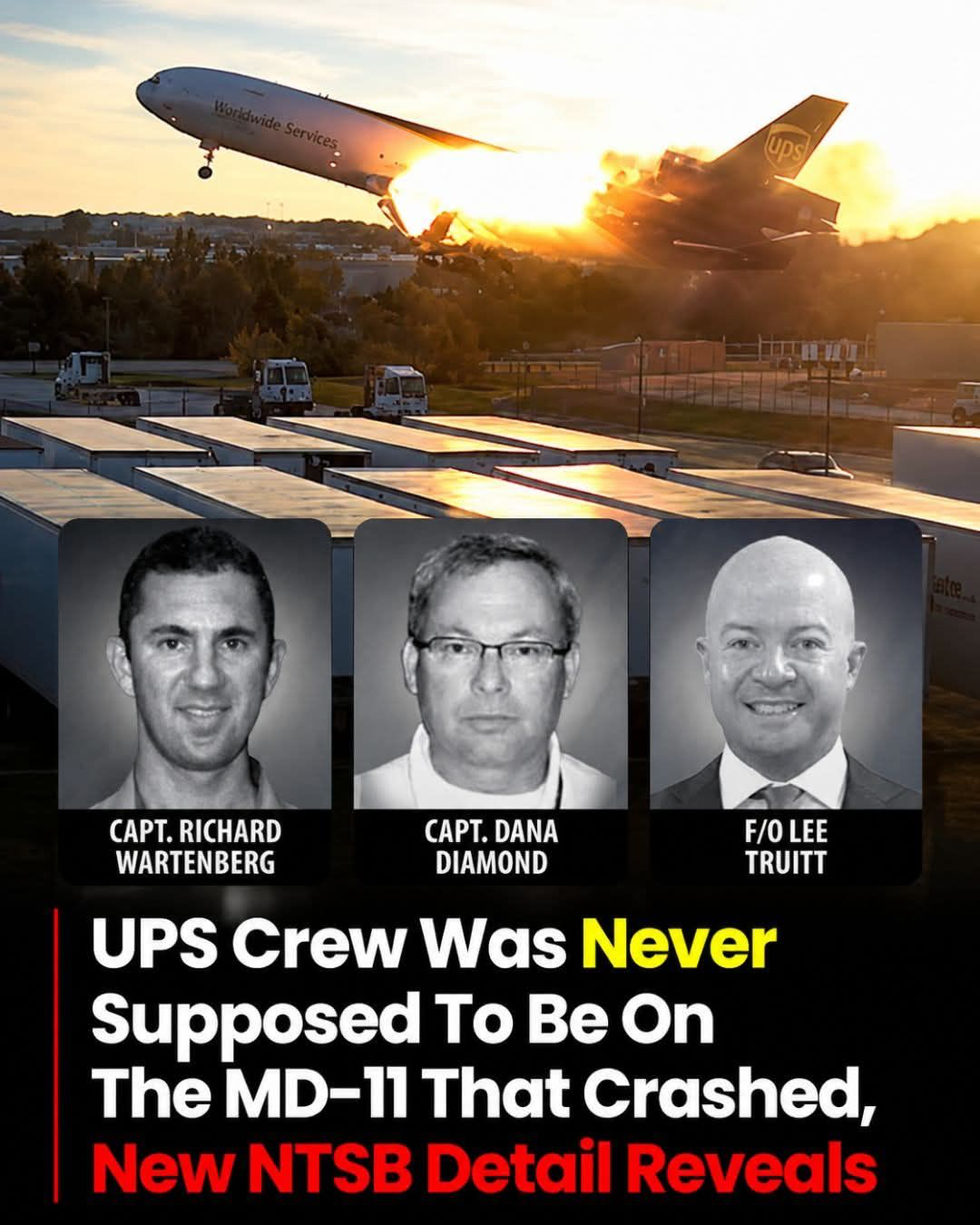
A heartbreaking new detail has emerged from the NTSB hearing into the deadly UPS MD-11 crash that killed three crew members and 11 people on the ground.
The crew of UPS Flight 2976 was never originally supposed to be on the aircraft that crashed.
According to newly discussed NTSB findings, the pilots had initially been assigned a different aircraft that day. But during the pre-flight inspection, a fuel leak was discovered and the aircraft was declared unairworthy by maintenance.
The crew then waited nearly two hours while a replacement aircraft was prepared.
That replacement aircraft — a 34-year-old MD-11F — crashed moments after takeoff later that afternoon, killing everyone onboard and multiple people on the ground.
Investigators also revealed the aircraft had only recently returned to service after spending six weeks grounded for repairs involving a cracked fuel tank. Structural corrosion had reportedly been found along parts of the fuselage before the aircraft was put back into operation.
What makes the story especially haunting is that the pre-flight inspection on the original aircraft was meant to protect the crew and keep them safe.
Instead, it placed them onto a different aircraft with a far more serious hidden issue.
As the NTSB hearing continues, many in aviation are now focused on whether warning signs surrounding the aircraft’s condition were missed — and whether this tragedy could have been prevented.